
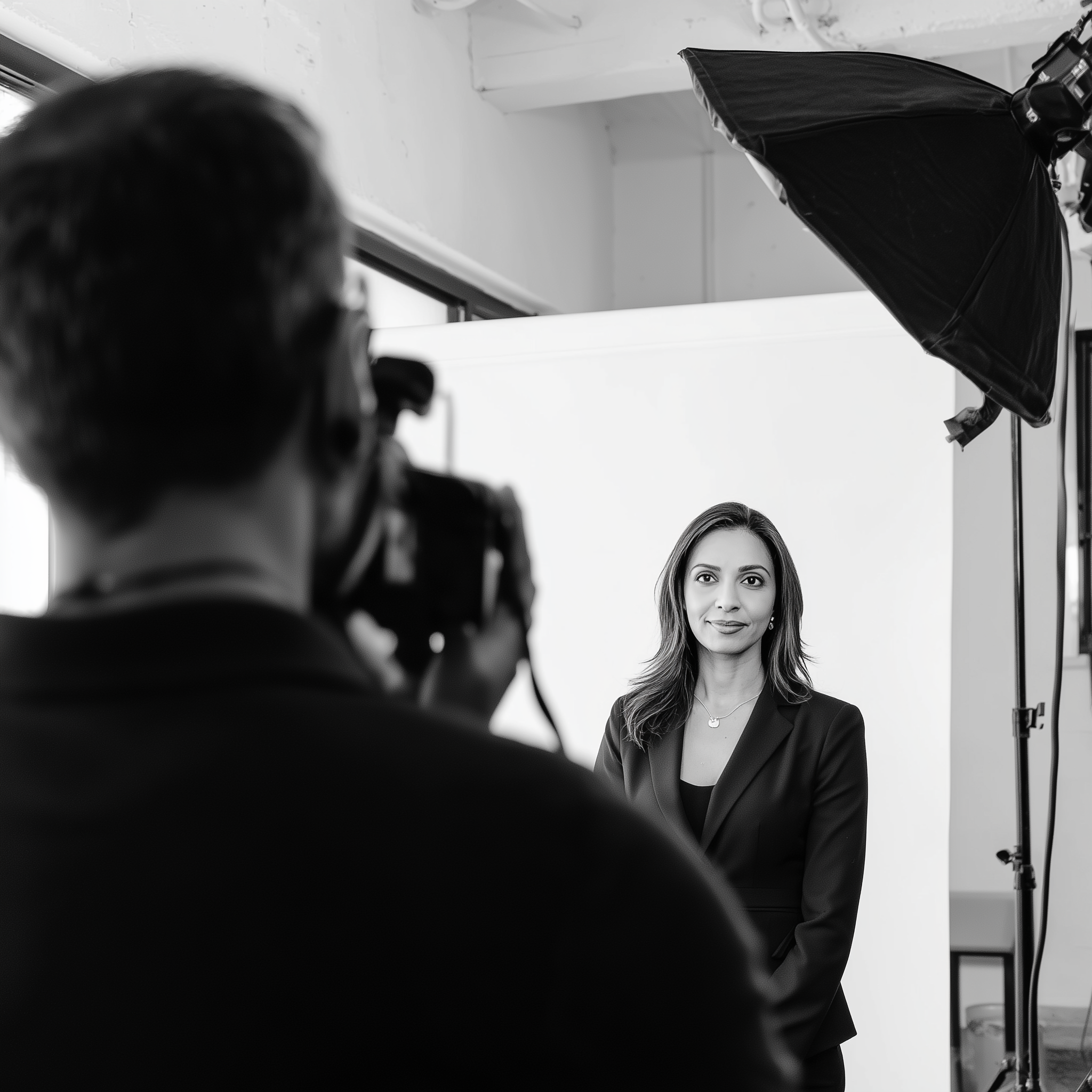
Personal branding is no longer limited to logos, taglines, or carefully written bios. In the digital environment, people are often seen before they are read. A photograph becomes one of the first signals through which others interpret credibility, style, confidence, and professional positioning. For entrepreneurs, creatives, consultants, executives, freelancers, and public-facing specialists, photography is not simply decoration. It is part of how identity is communicated.
This is why photography for a personal brand requires more than a technically strong portrait. It must combine aesthetics with professional meaning. If the image is visually attractive but disconnected from the person’s work, it may feel empty or overly stylized. If it is professional but visually flat, it may fail to create memorability or emotional connection. The strongest personal brand photography lives between these two poles. It is visually refined, but also aligned with real purpose.
At its core, personal brand photography is about controlled perception. It shapes how a person appears in digital space, on websites, social media profiles, speaker pages, media features, business materials, and online platforms. People form impressions quickly, often without realizing how much visual cues influence their judgment. Posture, gaze, clothing, background, light, color, and framing all communicate something. Together, these elements can suggest authority, warmth, creativity, sharpness, accessibility, elegance, or innovation.
Because of this, a personal brand photo session should never begin with style alone. It should begin with positioning. Before the camera is even raised, there needs to be clarity about what the images are meant to communicate. A lawyer, designer, startup founder, therapist, photographer, creative director, coach, or business consultant may all want “professional” images, but professional does not mean the same thing in each case. Some need to communicate structure and trust. Others need to signal originality and boldness. Some need softness and approachability, while others need a more editorial or strategic tone.
This is where the relationship between aesthetics and professional image becomes especially important. Aesthetic decisions should not be random or trend-driven. They should support the person’s professional identity. A minimalist background may reinforce clarity and authority. Natural light may suggest openness and authenticity. A more sculpted studio setup may create a stronger sense of refinement or creative control. A city environment may communicate dynamism, while a quieter interior space may feel more thoughtful and intimate. The setting is never neutral. It becomes part of the message.
Clothing works in the same way. In personal brand photography, wardrobe should not be understood only as fashion. It is visual language. Texture, fit, color, and silhouette influence how the subject is perceived. Sharp tailoring may communicate confidence and structure. Softer materials may create a more human and approachable feel. Monochrome palettes often feel clean and contemporary, while richer tones can add warmth and distinction. The key is not to dress according to a universal formula of success, but to choose clothing that supports the real professional narrative of the person being photographed.
One of the biggest mistakes in personal brand photography is over-performing professionalism. This often happens when the images become too rigid, too generic, or too obviously constructed around what people think a “successful” person should look like. The result may be polished, but it rarely feels personal. Strong personal brand photography needs polish, but it also needs truth. A person should still look like themselves, not like a stock image version of success.
This is why expression and body language matter so much. In many cases, what makes a brand portrait convincing is not the perfect outfit or location, but the sense of ease within the frame. A forced smile, unnatural hand placement, stiff posture, or exaggerated seriousness can weaken the image even if everything else is well styled. The most effective photographs often emerge when direction helps the subject stay intentional without becoming artificial. Confidence in a personal brand portrait is usually communicated through subtle control rather than through obvious performance.
Another important aspect is consistency. Personal branding rarely depends on one photograph alone. More often, it requires a set of images that can function across multiple contexts. A strong series may include a clear portrait for profile use, a more relaxed frame for social media, a working image for websites or press pages, and a few close details or wider compositions that help build a fuller visual identity. The goal is not repetition, but coherence. The images should feel like they belong to the same person and the same visual world.
This is where aesthetics become especially powerful. When a personal brand photo series has a consistent visual language, the result feels more intentional and memorable. Similar tones, lighting logic, emotional atmosphere, and compositional rhythm create a sense of identity beyond the single frame. This coherence is what helps a personal brand look established rather than improvised. People may not consciously analyze these elements, but they respond to them intuitively.
At the same time, personal brand photography should remain flexible enough to feel alive. If the images are too tightly controlled, they may lose warmth. Audiences increasingly respond to visuals that feel real, even when they are carefully produced. This does not mean careless or casual photography is always better. It means that authenticity now plays a larger role in professional image-making than it once did. Viewers want to see competence, but they also want to sense a real person behind the image.
For this reason, the best personal brand photography often combines refined structure with small moments of naturalism. A clean composition may be balanced by an unforced expression. A polished outfit may be softened by movement or gesture. A professional setting may be made more human through interaction with space, light, or personal objects. These details make the photographs more believable and emotionally engaging.
Photography for a personal brand also has strategic value over time. As a person’s professional identity evolves, their visual representation should evolve with it. Images created for a new business launch may differ from those needed later for thought leadership, media presence, or expanded visibility. A strong photo session does not only capture how a person looks in one moment. It helps express where they are in their professional development. In that sense, personal brand photography is not static. It is part of an ongoing visual conversation between the individual and their audience.
The rise of digital platforms has made this even more relevant. Today, a person may be introduced through a LinkedIn profile, personal website, conference page, podcast thumbnail, publication feature, newsletter, or social media post before any direct contact happens. In each of these spaces, photography helps carry identity. It tells viewers whether this person appears confident, current, thoughtful, distinctive, creative, trustworthy, or aligned with their field.
In the end, photography for a personal brand works best when it does not force a false choice between beauty and professionalism. It should not be only aesthetic, and it should not be only functional. The strongest images succeed because they hold both. They are visually strong enough to attract attention and emotionally grounded enough to feel credible. They express not just what a person does, but how they inhabit their professional role.
That is what makes personal brand photography so important today. It is not merely about looking good in front of the camera. It is about creating a visual presence in which style, identity, and professional meaning work together. When that balance is achieved, the photograph becomes more than an image. It becomes a clear and lasting extension of the person’s brand.